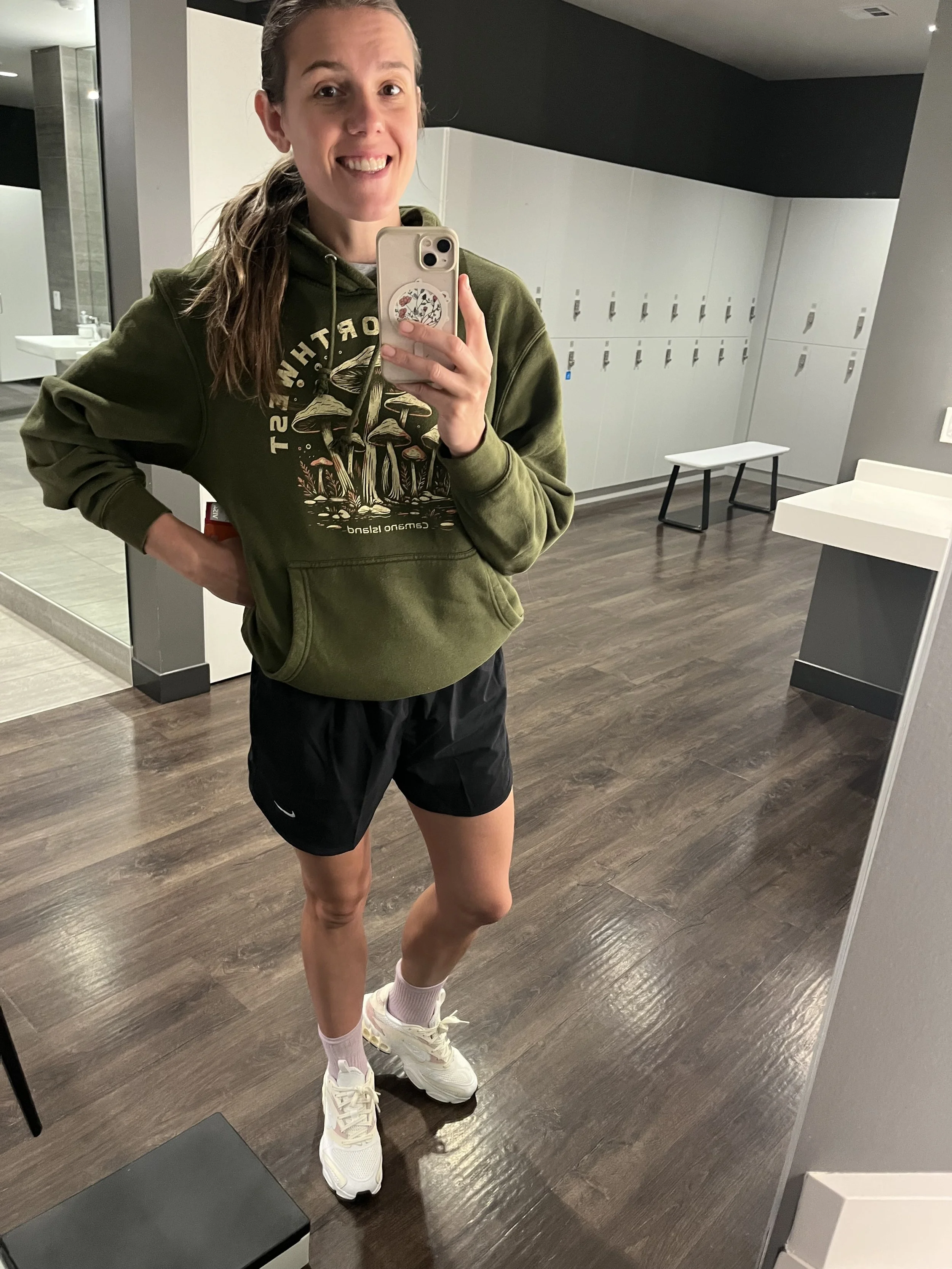
Jess. A conscious coach.
I share my personal education and career journey to help align the testimonial of why and how the NRG system (notice, realign, go.) works to help change our lives from negative thinking patterns, to a regenerative and expansively beautiful life.
In my family, I was of the first generation to go to college. I come from a long line of gardeners, carpenters, bridge-builders and bartenders. Growing up, I was always fascinated with learning. I reached for the encyclopedia on our bookshelf and created reports for things I found interesting because I wanted to. I found my way to college graduation after 4 1/2 years with a bachelors of arts in health and fitness education. I immediately got a job teaching at a middle school back across the state, closer to home and I was proud to say that I had a career by the time I graduated college.
August 2015, after college graduation in a summer conference for teachers to help give energy and support collaboration, a new sense of Self was created within me; I felt within a path I was destined for. Giving aim to this vision, I was reintroduced to Maslow‘s Hierarchy of Needs. I was reminded that we don't always see the whole truth the first time we interact with something. Before I had not seen myself in this model, I had not processed this idea to an application sense, I also realized that the deeper truth with this hierarchy within my upbringing through elementary into college, I saw that I had only been surviving through life. I had no spiritual path, and even worse, I didn't feel like I belonged anywhere, so I coped with it by choosing alcohol (I didnt see this coping mechanism truth until I was writing this paragraph, but here we are). Spirituality wasn’t something that was necessarily talked about in my home, though it wasn’t bashed, I just had no habit that lead me to health in this area of my life. Seeing this hierarchy of ways to spend my time, my focus and my energy, gave great value to the actions that I was teaching to my students. I saw a path of education for me that was expansive and energizing in itself. Here, is where I learned learning matters, AND not everyone has equal opportunities; even I as the teacher was at a detriment.
As my career evolved, I fell into the trap of taking work home, not using sick days and spending my weekends planning and preparing for the week ahead. The Sunday Scaries crept up and my stress for the upcoming week clouded my day off. I am not alone in this feeling as I continue to learn more about my content in health, I learned that at least one in five adults are diagnosed with mental health conditions. As I continue to learn about the mind, I became intrigued with the vast amount of systems designed for support. This continued to feed my interest in my most actualized self. My intuition told me that there is more out there and I wanted to know how it all worked.
I had always known that I was a tough kid. I knew that I had a good work ethic that I learned from my parents, and I was generally kind so I was able to get and keep any job I had. Despite knowing this, I always remember being clouded with sadness, guilt, or anger for whatever reason. Perfectionism prevented me from taking action and hindered my ability to take steps in the right direction. I was lucky to have settled into a career where learning about the mind was a focus I could run with. It provided me words for how I was feeling and guidance for a path to go. I felt lighter the more I leaned into something that kept my attention, and a type of “heart energy” within myself to go forward.
Three years later, when I became a high school health teacher in the upcoming years, the gravity of understanding that this health class was and is, probably is the last and only health class these kids will get, started to pull me down and take over my time. My mind was consistently lost in planning and thinking of lesson for my students. To create “healthy students for life,” I saw they needed a variety of substance-free activities to occupy their time, that then also benefited their health. I knew that habits, activities, and mindsets that teenagers engaged in are highly impactful into who they become into adulthood. Something we spent quite some time on, and reflecting through was planning our weeks, finding balance in the activities. Ideally, all students would have perfectly planned out a week, time-blocking each part of their day, as a way to practice and visualize their time spent as an adult. During these lesson, I found a deep rooted connection between our physical bodies, our mental health, and who we’re destined to be. Even deeper, how to access powers within us, and use different ones, based on the current situations we need to work through; I invested a lot of energy into creating these schedules.
But as honest as High School students are, not all students could be there mentally to process this activity. Sometimes they didn’t have breakfast, sometimes “drama” was happening in their group chats, sometimes they were coming from a family fight, unable to stay awake. This is not just the case for my class, but many students across the U.S., unable to retain the information, let alone find value in it. If healthy habits at home were not a priority, processing this learned information became even more diffencult. As we grow older, and gain more control of how we spend our time, we either fall unconsciously into bad habits learned from family and friends, or something inspires us to make changes along the way. I saw time and time again, students not set up for success from home, unable to participate in the lesson to learned to be different from home, so when they grow up, they don't get to be different from home, and the cycle of negative health habits continues.
When we participate and engage, we are a part of an experience.
Through experience, we learn and grow.
As the stressors of my job prevailed, I learned no new location brings less of it, actually only more. I wondered “is this profession for me?” because through all the good I thought I was doing within the schools, a typical school model of “give them the A,” education, not enough resources to provide kids with a safe environment, and some other personal “learning opportunities,” I found I needed a break to process this 10 year journey of what I've seen true in the next generation of kids, and the future of our collective.
Poetically a theme of consciousness prevailed through these reflections and everything started to fall together in an alignment that made sobriety feel good. I understand the gravity that alcohol has on a person, and the ease of access we really have to this substance, and I see that drinking as a coping mechanism for 6 of the 7 universal emotions is where most of our major problems in society can stem from . I’m not saying humans should never drink, but I can bring light to and bridge the gap between our understanding of consciousness, mental health conditions, and how our emotions influence our behaviors.
Former NBA star Chirs Herren, provides a clear message to students about this idea that we use alcohol to morph into people who morph into their surroundings. We lose our Self to do what we think others want us to do. If might feel good in the moment, especially as teeneagers when the goal of our time period is to find self-identity. A work, alcohol is an “social lubricant,” to ease an “power-imbalance,” between leaders and their team, or between teams to diminish our differences. I had to reflect as an adult “did I actually evolve as a person at such a crucial age of development when I first took to alcohol to become ‘friends,’ with those around me?” Herren empowered his listeners by saying that it takes guts to be who you authentically are. Alcohol is marketed as the easy fix for almost anything; help you with social anxiety, take your mind off the fight you just had, bring peace to the end of your hike. There‘s an alcoholic beverage for almost any situation, and we are marketed this by the collective $300 billion industry. (With some quick internet searches and journal math, the ratio between people on the planet in 2024 is 8 billion.) This male dominating, multi BILLION dollar industry of legal alcohol has reached our subconscious selves to make us crave their products… but I digress.
Initial use might be curiosity, might be a solution to a problem, or just a way of fitting in, a right of passage. Continued use might be because “nothing bad has happened..” or “it’s available and I can,” and even: “I’m overwhelmed, I need a drink,” ‘I’m bored, I’ll have a drink,” “I’m excited, I’ll have a drink.” For me alcohol was the answer to everything, yet nothing. I was left feeling empty, worthless, and often embarrassed at what I did. These negative thoughts prevented me from working towards the dreams that I have, and that I am worthy of. It makes the things I want to do at the end of the day untouchable because it has drained me of the energy to start the process. But most importantly, alcohol prevented me from growing into my most authentic self. The stress response I got stuck in was “Life is hard, alcohol makes it easier.”
I knew learning is a magical thing, it’s a catalyst of change for a person. Seeing something “click” in a learners mind, or hearing conversations build on each other was something that I found so beautiful in my work as a teacher and coach. It kept me engaged in my job, and creative with my approach. In my free time I choose to listen to a podcast and take notes, I wake up early to build my lessons for the day based on current topics for students to resonate with them. To my core, I love learning, but I was ultimately feeling stuck; in my thinking habits, justifications, and energy for new routines. I knew I had to give up alcohol, but it seemed like such a part of me, I felt I didn't actually need to.
Unfortunately by hitting what I consider to be “rock bottom,” I unconsciously participated in a hard “reset” to shake the old habits I so deeply wanted to replace. I was (thankfully) forced to close out the chapter of who I was, to discover and create who I wanted to be in this world. My intentions, journaling, and praying wasn’t enough for me to “just change,” the way I lived my life. I needed, as some might say, “divine intervention,” to guide the changed behaviors and provide a deeply rooted ultimatum for me to choose who I was going to be. Near the end of my 10 years teaching health and fitness, I was pulled over for failing to stop at a Stop sign around midnight on a Friday night. After a variety of field sobriety tests, I was arrested and brought to jail. Sitting on the bench in front of the police officers, I dedicated out loud that this is a lesson for something that I can now see is a major problem for me, and our collective future. The cycles of fines, deaths, predators, distrust, and perpetual negative feelings feeds the systems of oppression within our communities. I took this opportunity to learn the depths of alcohol and it’s effects on our society, through my own experience.
I hope that the insight I share on the mental health conditions I’ve worked though, (and that many of us experience), can help eliminate the shame and guilt that gives gravity to the mental load that the condition is. Come to each new idea, practice and skill saplication with an open mind, an ability to sit with and visualize what the idea can look like in your life. Try it on, chew it, share it with those close to you. I really do hope that by exploring this space, you have a new perspective on how to navigate life, no matter your circumstance, religion, or state of mind you are in. This NRG cycle works because we do, and when we’re working in synchronicity, our path to peace is expansive, bringing those in our communities up along our path of light.
Finding strength in new cycles is in choosing to slow down and recognize sensations within and around us. It’s choosing supportive affirmations that remind us of our unique truths, …that I am artistic, silly, and inspiring. This brings to light “parts” of me that are exciting, influential, and most importantly, authentic. I don’t need alcohol to have a “better conversation,” I don’t need a cocktail to hold in my hand while I cook dinner..” the list goes on, and we all have our own list of excuses. What I do need is to believe in my values of efficiency, health, and creativity.
The key for me was replacing drinking with the learning process, and recognizing that if alcohol makes us unconscious, learning makes us more conscious. Everything seemed “surface level,” that I was just going through the motions of life checking boxes, playing roles, and living into who I thought people needed me to be. At the bottom of this need to drink, it was me being in-authentic to my true Self. I wasn’t challenging myself, my brain wasn’t stimulated in enjoyable ways, and I needed more, so I coped with these feelings by using alcohol to be “okay” with my environment.
Learning is expansive, and helps us move into the next moments and steps of our lives with confidence. When we think about it, drinking darkens our vision, slows our heart rate, and closes our ability to remember things. Learning on the other hand, deepens our connection with others, expands what we know about topics, and even increases our self-esteem. It feels good to talk about things we’re interested in, it’s natural to flow in conversations we’re knowledgeable in, and when we teach someone something, we are delighted in our abilities. Learning as a perpetual life experience can bring so much joy and authenticity to our days that it can be infectious, and I believe this is how we can raise the vibration of our human kind.
Still sober, I’ve cumulated the time and energy to provide my observations of the mind-body-spirit connection into a positive system we can update into our subconscious for a brighter future. Thank you for staying with me on this journey.
Forever in Gratitude
~Jess